AMC AMX Information and History


(AMC AMX)

AMC AMX Stats

AMC AMX Pages

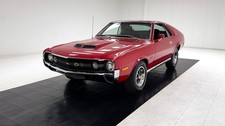
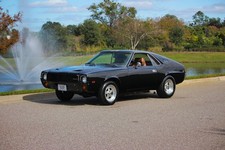
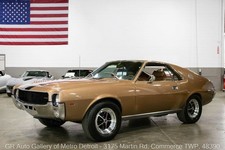
The AMC AMX got it’s start in 1966, when Vignale of Turin, Italy constructed the first prototype by hand. This had a 290 V8, with a rear rumble seat. The idea was scrapped in the fall of 1969, and the Javelin was put on the front burner as a new model to be produced. In the early winter of 1966, AMC reconsidered the idea of the AMX, and decided to go ahead with the plans of building this 2 person sports car. The reasoning behind the go-ahead was more to give AMC a new image, than to sell a lot of sports cars. The AMC management wanted to bring in a younger crowd to the AMC showrooms, since customers did not associate AMC with muscle cars , sports cars, or really any type of performance cars. The AMC models were considered what your grandparents would drive.

The AMC management did not have a lofty goal of selling a lot of AMX cars. They were worried that the image AMC had with the younger crowd would hinder the sale of the new Javelin. The AMX was basically built and marketed to change that image, and boost Javelin sales. 2 seat sports are fun to drive, but they can be impractical for a family type vehicle. If the sales people could not sell the AMX to a potential customer, the Javelin would be a very good substitute. The goal of 10,000 AMX’s a year to be produced, if reached, would have been an added bonus in the eyes of AMC’s management. Unfortunately, in the 3 years of the AMX model, they never reached that number. The most sold was in 1969, at 8,293. The AMX did change the image of AMC, hence the AMX is sometimes nicknamed, “The Image Changer”.

AMC saved a lot of expenses by designing the AMX off the Javelin line, basically a shortened version of the Javelin, with a shorter wheel base and no back seats. The engines, front suspension, drive train, and interior trim would be shared, and some doors, bumpers, trunk lid, and glass would also interchange.

AMX Debute
The AMC AMX debuted in February 1968 at the Chicago Automobile Show as the first steel-bodied, two seat American production vehicle since the 1957 Ford Thunderbird. Prior to the debut, Craig Breedlove and his team of drivers blew away 106 automobile records. The AMX claimed 90 new Class C records using the 290 V8 with the standard 4 speed transmission, and 16 new records in Class B using the 390 V8 with the optional 3-speed automatic. Needless to say, the AMX had already made waves before it's official debut.

Production of the AMX began in November, 1967 and the AMX was released to the public in February, 1968. Most automotive publications who reviewed the AMX gave it a favorable review. AMC introduced the model to the automotive press in two locations; Daytona International Speedway in Florida, and at Orange County Raceway in California. They were invited to take the AMX for a spin, running around pylons, and racing the 390 versions on the ¼ mile track, handing out trophies to the top performers. This really created quite a buzz among the reviewers, and gave them good experiences to write about, favoring the AMX.

AMX Dash Plaques
All AMX models had dash plaques that were installed at the factory, each with a unique ID number. The first 50 AMX’s built in 1968 just had the term ‘AMX’, and then 5 digits were added to the plaque after these 50. Contrary to many beliefs, these numbers had nothing to do with the production sequence of the AMX. The highest number was 5,000 too high, and the lowest numbers started at 00100 for each year; numbers under 00100 were supposed to be reserved for special stars or athletes. The only special numbers that I know of that were used were 000003 for a Green Bay Packer player (His jersey number), and Playboy Playmate of the Year Angela Dorian. She didn’t have a low number, but instead had her measurements on the plaque. The car was given to her in the color pink, and she later had it painted black.

The location of the plaque also changed over the course of the AMX’s life. The first few hundred models produced in 1968 had the plaque on the dashboard, and was then moved to the glove box for the next few hundred models produced. It then returned to the dashboard, where it stayed throughout 1969. The plaque returned to the glove box for the 1970 model year, due to the drastic style change of the dashboard for the model year.

Group 19 Performance Options
These options were not very popular due to the fact that installing these parts negated the vehicle warranty, and because they were not factory installed at the manufacturing plant, the vehicles could not be raced in the stock races. The Group 19 Performance Options were the most popular on the AMX model line.